
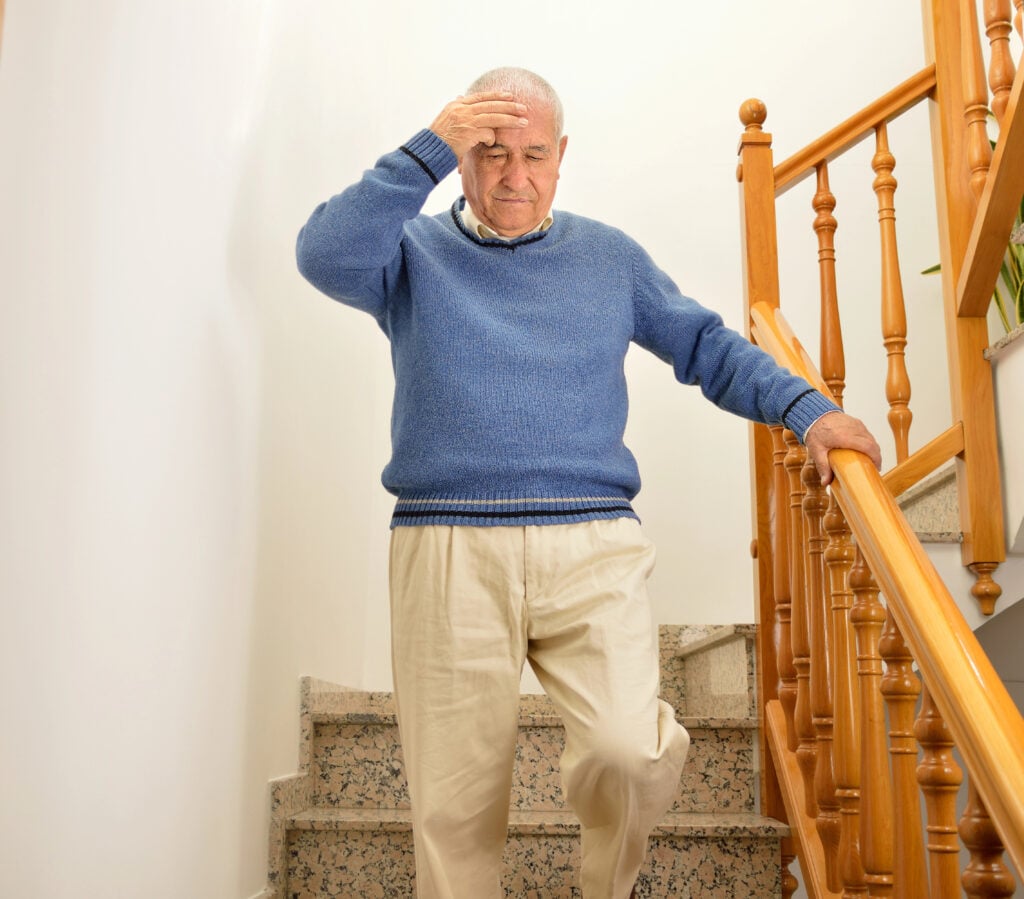
Fall prevention for seniors often starts with noticing small changes before a fall happens. Changes in the way an aging parent stands, walks, or moves around the home may be early signs that their risk of falling is increasing.
Maybe Mom has started pushing herself up from the armrests of her chair. Dad reaches for the kitchen counter as he walks past. Perhaps they have stopped using the stairs, or you notice them taking smaller, slower steps around the house.
These changes can be easy to dismiss as a normal part of getting older. However, they may point to a growing senior fall risk that deserves attention.
According to the National Institute on Aging, more than one in four adults age 65 and older falls each year. Falls can lead to fractures, hospitalization, disability, and loss of independence. The good news is that families can take steps to reduce many of the factors that contribute to falls.
If you are wondering why your elderly parent keeps falling, or you have noticed that they seem less steady than before, here are seven warning signs to watch for.
1. Getting Up From a Chair Has Become Difficult
Pay attention to how your parent gets up from a sofa, dining chair, or bed.
Do they need several attempts before they can stand? Are they pushing down heavily on the armrests? Do they reach for nearby furniture as soon as they get up?
Difficulty standing can be related to reduced leg strength, balance problems, or other health changes. Muscle weakness can make everyday movements such as standing, walking, and climbing stairs more difficult and may contribute to falls.
This does not necessarily mean your parent is about to fall. It does mean that a change in strength or mobility is worth discussing with their health care provider.
2. They Hold Onto Furniture While Walking
Watch what happens when your parent walks through familiar rooms.
Are they moving from the sofa to a table, then reaching for the wall or countertop? This may be their way of creating extra support when they do not feel completely steady.
Also look for changes in the way they walk. Smaller steps, shuffling, dragging one foot, or moving much more slowly than before can be signs that walking has become more difficult.
If these changes are new or getting worse, a medical evaluation can help identify what may be affecting their balance or mobility.
For seniors who need extra support with everyday movement, Harmony at Home Senior Care’s Mobility Assistance provides hands-on support to help improve confidence, reduce fall risks, and promote strength and independence.
3. They Feel Dizzy When They Stand Up
If Mom says, “Give me a second,” every time she stands, pay attention.
Some older adults experience a drop in blood pressure when moving from sitting or lying down to standing. This can cause dizziness, lightheadedness, or unsteadiness. The National Institute on Aging identifies postural hypotension, a drop in blood pressure after standing, as one factor that can contribute to falls.
Encourage your parent to stand slowly and give themselves time before beginning to walk. Frequent or new dizziness should also be discussed with their health care provider, especially if it started after an illness or medication change.
4. Their Vision Has Changed
Good vision plays an important role in balance and safe movement.
Changes in vision can make it harder to see steps, notice objects on the floor, judge distances, or move safely through areas with poor lighting.
Your parent may begin hesitating at stairs, avoiding dim hallways, or becoming uncomfortable walking outside at night. Even relatively small changes in eyesight can make navigating the home more difficult.
The Centers for Disease Control and Prevention (CDC) notes that vision impairment can increase the risk of falls among older adults. Regular eye exams, an up-to-date glasses prescription, and good lighting throughout the home can therefore be important parts of fall prevention for seniors.
5. Their Medications Have Recently Changed
If your parent has recently started a medication, stopped one, or had a dosage changed, take note of any changes in alertness, balance, or mobility.
Some medications can cause side effects such as dizziness, drowsiness, confusion, or problems with balance. Taking multiple medications can also make medication review especially important.
The CDC’s guidance on preventing falls recommends talking with a health care provider or pharmacist about medicines that may make an older adult dizzy or sleepy.
Do not stop or change medications without medical guidance. Instead, keep an updated medication list and ask your parent’s doctor or pharmacist whether any prescription medicines, over-the-counter products, or supplements could be contributing to dizziness or unsteadiness.

6. They Are Weaker After an Illness or Hospital Stay
Coming home from the hospital does not always mean a senior has returned to their previous level of strength.
After an illness, surgery, or hospital stay, everyday activities may suddenly require more effort. Your parent may become tired walking from one room to another, need more help getting dressed or bathing, or struggle with stairs that were manageable before.
Families should pay particular attention during this period. Temporary weakness can create new safety concerns, especially when a senior tries to return immediately to their usual routine.
Harmony at Home’s Transitional & After-Surgery Care provides assistance for seniors recovering after surgery or a hospital stay, helping support a safer and more comfortable recovery at home.
7. They Are Quietly Changing Their Routine to Avoid Falling
Sometimes the strongest warning sign is not a fall. It is what your parent has stopped doing.
Maybe Dad no longer goes upstairs unless someone is home. Mom has stopped using the shower and prefers a sponge bath. They avoid walking to the mailbox, carrying laundry, or going into certain rooms.
You may also hear about incidents that get brushed aside:
“I almost slipped, but I’m fine.”
“I lost my balance, but I caught myself.”
“I just bumped into the counter.”
Repeated near-falls matter. So does a growing fear of falling.
If bathing, dressing, grooming, or other daily routines are becoming difficult to manage safely, Harmony at Home’s Personal Care services can provide respectful assistance while helping seniors maintain their comfort, dignity, and independence.
What Should You Do If Your Parent Falls but Seems Fine?
A fall should not automatically be dismissed because there is no obvious injury.
First, encourage your parent to remain still for a moment and determine whether they are hurt before trying to get up. Getting up too quickly or incorrectly could make an injury worse.
If they are injured, cannot safely get up, have hit their head, or have concerning symptoms, seek appropriate medical help. Call 911 for an emergency.
Even when your parent says they feel fine afterward, tell their health care provider about the fall. The National Institute on Aging recommends informing a doctor about falls even when the person does not appear to be hurt. A fall can sometimes help uncover an issue involving medications, blood pressure, vision, strength, or balance.
It is also worth asking what happened immediately before the fall.
Did they become dizzy after standing? Did they trip over something? Were they rushing to the bathroom? Did their leg feel weak? Had they recently started a new medication?
Understanding what happened can help families and health care professionals identify ways to reduce the chance of another fall.
Look at the Home, Too
Not every fall starts with a medical problem. The home environment matters.
Walk through your parent’s home with fresh eyes. Look for loose rugs, cluttered pathways, electrical cords, poor lighting, slippery bathroom surfaces, and stairs without secure handrails.
Bathrooms deserve particular attention. Grab bars and nonslip surfaces can make bathing and toileting safer. Hallways and stairs should be well lit, and commonly used pathways should remain clear.
The goal is not to take away your parent’s independence. It is to make the home easier and safer for them to navigate.
When Is It Time to Consider More Help at Home?
One warning sign may simply mean it is time to pay closer attention. Several changes happening together may suggest your parent needs more support.
Consider asking:
- Can they safely get in and out of bed or a chair?
- Do they need support while walking?
- Are bathing, dressing, or toileting becoming harder?
- Have they fallen or nearly fallen more than once?
- Are they avoiding activities because they are afraid of falling?
- Do you worry about what could happen when they are home alone?
These conversations are not about taking control away from Mom or Dad. The goal is to identify where a little extra help could allow them to continue doing as much as possible for themselves.
Helping Seniors Stay Safe and Independent at Home
At Harmony at Home Senior Care, we believe support should help seniors maintain their independence while making daily life safer and more comfortable.
Our caregivers can assist with mobility, personal care, daily routines, wellness support, and other everyday needs. Care can be personalized as a senior’s health and mobility needs change. Harmony’s care assessment also considers areas such as daily living assistance, health concerns, mobility, and fall risk when developing an individualized care plan.
Harmony at Home Senior Care provides compassionate, non-medical in-home care for seniors throughout the Dallas-Fort Worth and Greater Houston areas, helping older adults live safely and independently in the place they love most.
If you have started noticing changes in your parent’s balance, strength, or confidence at home, you do not have to wait for a serious fall before looking at their care needs.
Schedule a free care assessment with Harmony at Home Senior Care to discuss your loved one’s mobility, daily routines, fall risk, and the support that may help them remain safe and independent at home. Call us today at 972-789-4187 to get started.