
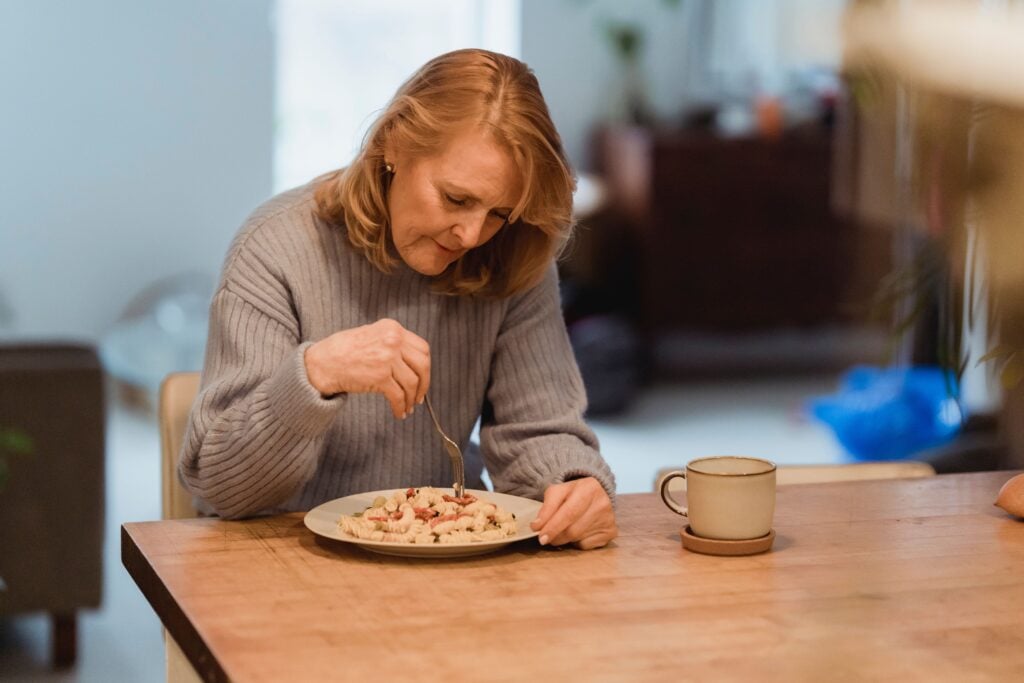
As parents get older, changes in eating and drinking habits can be easy to miss. Mom may say she already ate. Dad may insist he simply isn’t hungry. But small changes around the home can sometimes tell a different story.
Senior nutrition and dehydration deserve attention because older adults may face challenges that make eating well more difficult. These can include a reduced appetite, difficulty shopping for or preparing food, problems chewing or swallowing, or simply forgetting to eat.
Here are five things families can watch for.
1. Unexplained Weight Loss
One of the easiest changes to notice may be how clothing fits.
Are Mom’s clothes suddenly looser? Has Dad needed to tighten his belt? Has there been a noticeable change in their appearance?
Unintentional weight loss in older adults can have many causes. The National Institute on Aging notes that reduced appetite, difficulty buying food, problems chewing or swallowing, and forgetting to eat can all contribute.
Unexpected weight loss should be discussed with a health care provider.
2. The Refrigerator Looks Different
Sometimes, the refrigerator can tell you more than asking, “Have you eaten?”
When visiting Mom or Dad, notice whether you see:
- Very little food
- Spoiled or expired items
- The same leftovers sitting untouched
- Few easy-to-prepare meals
- Drinks that aren’t being replaced
An empty refrigerator doesn’t always mean someone has lost their appetite. Grocery shopping, cooking, opening containers, or cleaning up afterward may simply be getting harder.
Try asking, “Has cooking or grocery shopping been getting harder lately?”

3. Meals Are Regularly Being Skipped
One missed meal isn’t necessarily concerning. A pattern of skipped meals deserves more attention.
Some older adults may feel full sooner, lose interest in food, or experience changes related to medications. Certain medications can affect taste, cause dry mouth, or reduce appetite.
Pay attention if full meals are regularly being replaced by a snack, coffee, or nothing at all.
4. Preparing Food Has Become Difficult
Your parent may still want to cook but find the process more difficult than before.
Consider whether they can comfortably shop for groceries, carry bags, open packages, chop ingredients, stand while cooking, and clean up afterward.
Small adjustments can help. The National Institute on Aging suggests options such as pre-cut fruits and vegetables when chopping food becomes difficult.
Prepared ingredients, simple meals, and help with grocery shopping can also remove some of the work involved in eating well.

5. They Forget Whether They’ve Eaten
Memory changes can make regular mealtimes harder to maintain.
An older adult may forget a prepared meal in the refrigerator or believe they have already eaten.
Keeping meals on a familiar schedule, labeling prepared foods, and having someone present around mealtimes can make the daily routine easier to follow.
Don’t Forget About Dehydration
Paying attention to senior nutrition and dehydration together can help families notice changes in everyday routines.
Encourage regular access to water and other appropriate beverages throughout the day. The National Institute on Aging recommends drinking plenty of water to support hydration, digestion, and nutrient absorption.
Families should pay particular attention during hot Texas weather, when staying hydrated becomes even more important.
If your loved one has been given specific fluid restrictions by a health care provider, follow their medical guidance.
Simple Ways to Make Eating and Drinking Easier
You don’t necessarily need to change everything Mom or Dad eats.
Start by making everyday routines easier:
- Keep water within easy reach
- Stock simple, nutritious foods they enjoy
- Prepare smaller meals if large portions feel overwhelming
- Make frequently used foods easy to reach
- Prepare meals ahead of time
- Eat together when possible
For older adults who fill up quickly, smaller and more frequent meals may be easier to manage. The National Institute on Aging also notes that eating with friends or family can make mealtimes more enjoyable.
Nutrition Support for Seniors in Texas
Texas families also have resources available when an older adult needs additional nutrition support.
Texas Health and Human Services works with Area Agencies on Aging to provide nutrition services for eligible older Texans. Programs can include home-delivered meals, community meals, nutrition screening, education, and counseling.
Families can find their local Area Agency on Aging by county or ZIP code through Texas Health and Human Services.
Texas HHS also provides an aging services helpline at 800-252-9240 for adults age 60 and older and people caring for them.
When Should You Talk to a Health Care Provider?
Contact your parent’s health care provider if you notice unexplained weight loss or a significant or persistent change in their appetite, eating, drinking, chewing, or swallowing.
Changes in eating habits can have many causes, so it is important not to assume they are simply part of getting older.

Helping Mom or Dad Stay Independent at Home
Sometimes the challenge isn’t knowing what to eat. It’s getting groceries, preparing meals, remembering to drink, or managing everyday tasks around the home.
Harmony at Home Senior Care can provide support with meal planning and preparation, hydration and nutrition routines, grocery shopping, companionship, and other daily activities.
With the right support, Mom or Dad can continue enjoying familiar routines and greater independence in the comfort of home.